


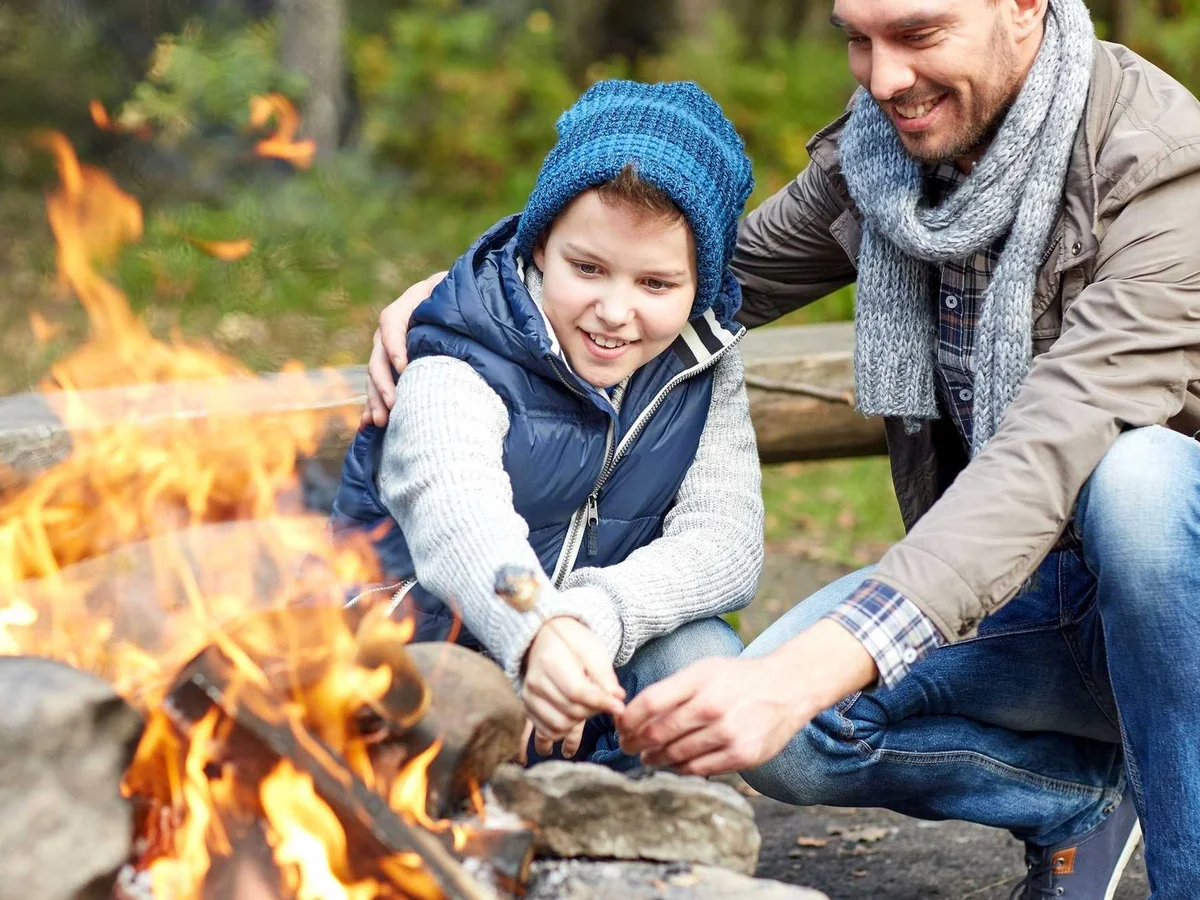
A campfire is the part of camping people remember, and it is also the part most likely to go wrong. Most of the skill is in preparation rather than in lighting it.
Before anything: is a fire allowed?
Check the rules for where you are, and check them on the day. Fire bans change with conditions, and “there is a fire ring here” is not permission.
Where fires are banned, a stove does everything a fire does for cooking and none of the damage.
Where to build it
Use an existing fire ring if there is one. Building a new one scars a new patch of ground.
If there is none, choose bare mineral soil or gravel, well away from tents, overhanging branches and roots. Clear a good margin down to bare earth. Never build on peat — it can burn underground and travel.
The three sizes of fuel
This is the whole technique, and skipping a stage is why fires fail.


Tinder — something that catches from a flame. Dry grass, birch bark, cotton wool, a firelighter.
Kindling — pencil-thin dry twigs. You need far more than you think, roughly two large handfuls.
Fuel — wrist-thick and up. Added only once the kindling is properly going.
Gather all three before you light anything. Chasing kindling with a struggling flame is how a fire dies.
Cooking on it
Cook on embers, not flames. Flames deposit soot, burn the outside and leave the inside raw. Let the fire burn down for half an hour and cook over the glowing bed.
A grill grate over the embers is the easiest arrangement. Foil parcels tucked into the edge of the coals work well for vegetables and fish. Cast iron handles the heat; thin pans warp.
Build the fire long rather than round if you are cooking, so you have a hot end and a cool end.
Putting it out
Properly, and earlier than you want to.
Let it burn down, then douse with water, stir the ashes, and douse again. It should be cool enough to hold your hand over. Do not bury it — buried embers stay hot for hours and start fires.
Leaving no trace
Burn wood down to ash. Scatter cold ash widely, or pack it out.
Use fallen dead wood only, and buy or gather locally — moving firewood moves tree diseases and insects with it.

