


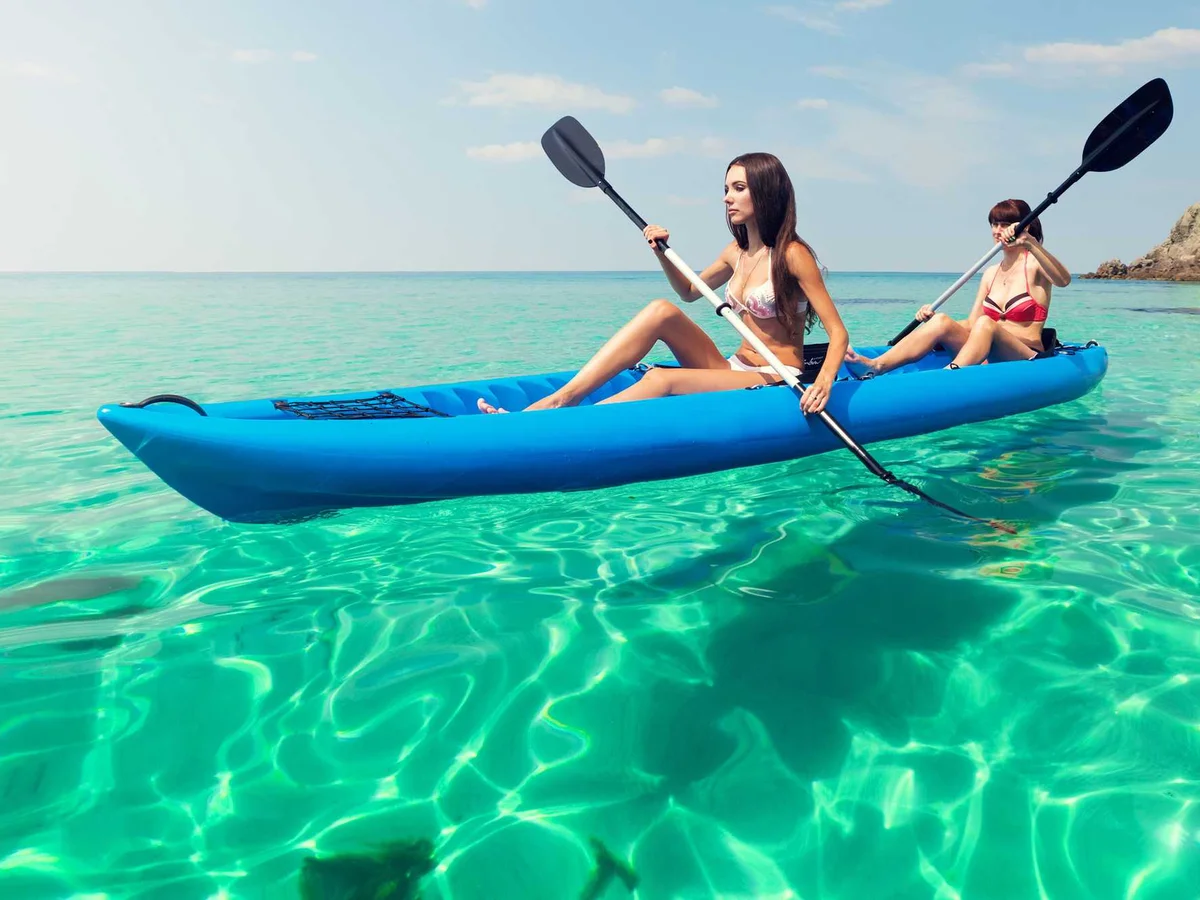
Kayaking in Hawaii can be one of the best mornings of a trip or a genuinely dangerous outing, and the difference is almost entirely conditions and timing.
Go in the morning
This is the whole of it. Trade winds build through the day, and an offshore breeze that is pleasant at eight is a serious problem at noon — it pushes you away from land and makes the paddle back hard work.
Most incidents involve people who launched late and could not get back.
Reading the conditions
Wind direction matters more than strength. An onshore wind is forgiving; an offshore one means every mistake takes you further out.
Surf at the launch. Getting a loaded kayak out through breaking surf is a skill. If there is surf at the beach, choose a different beach.
Swell and current. Both vary enormously by coast and by season. The sheltered side of an island in winter may not be the sheltered side in summer.


Ask the rental shop about the specific spot on the specific day. They know, and their advice is the most valuable thing they provide.
Where you can launch
Rules vary by island and by beach. Some launches require a permit, some are closed seasonally, and some areas are protected with restrictions on access — including seasonal restrictions where humpbacks are present.
There are also rules about approaching marine life. Turtles, monk seals and dolphins all have legal minimum distances, and monk seal haul-outs are closed off entirely.
Renting
Sit-on-top kayaks are the norm and the right choice — stable, self-draining, and easy to get back onto after a capsize.
Confirm the rental includes a lifejacket for everyone, a leash, and a dry bag. Ask about their pickup service if you plan a one-way paddle.
Double kayaks are harder than they look with a mismatched pair; two singles are often the happier choice.
Safety basics
Wear the lifejacket rather than sitting on it. Practise getting back on in shallow water before you need to. Stay within a distance you could comfortably swim. Never paddle alone.
Take water and sun protection — you will be exposed for the whole trip and reflection off the water roughly doubles it.
And tell someone where you are going and when you will be back.

