


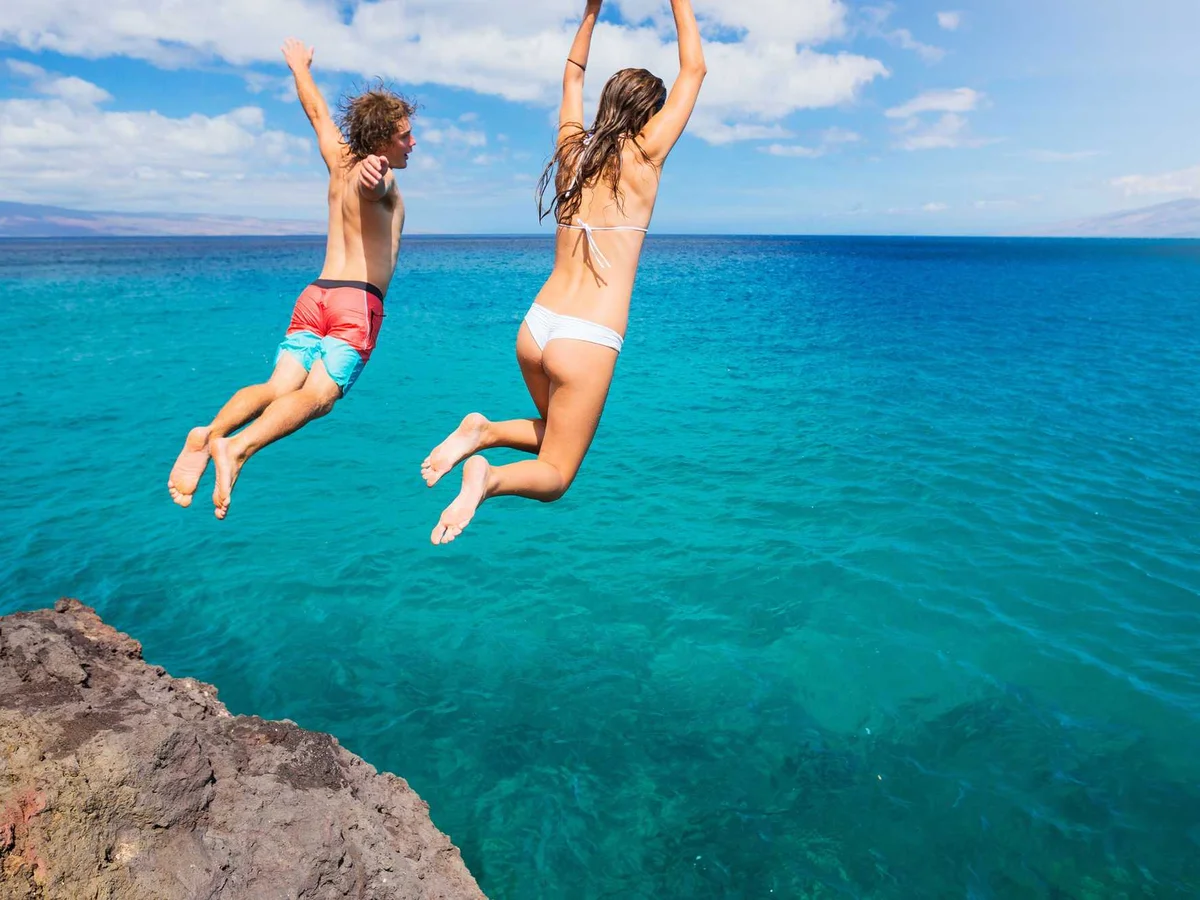
Cliff jumping looks straightforward and is one of the more consistently dangerous things visitors do on holiday. The physics are unforgiving and the hazards are almost entirely invisible from above.
Why it goes wrong
Depth. You cannot judge water depth from a height, and depth changes with tide, season and rainfall. A pool that was deep in spring can be shallow by August.
Submerged objects. Rocks, logs and debris move. A spot that was clear last month may not be.
Entry speed. From ten metres you enter the water at roughly fifty kilometres per hour. Landing badly at that speed causes serious injury on impact with water alone, without anything being under it.
Getting out. Frequently the real problem. Currents, sheer sides, cold, and a swim further than it looked.
Cold shock. Sudden immersion in cold water causes involuntary gasping and a sharp drop in swimming ability for the first minute.
The checks that matter
Get in the water first and check the landing zone yourself, on the day. Not last week, not from above, not on someone’s word.


Know how you are getting out before you jump in.
Never jump into water you have not personally verified, regardless of how many people are doing it.
Feet first, arms in. Head-first entries are how the worst injuries happen.
Never alone, and never after drinking.
Where it is and is not allowed
Many celebrated jumping spots are on private land, in protected areas, or explicitly prohibited — often because somebody has already been badly hurt there.
Some places have organised, supervised jumping with staff who check conditions daily. If you want the experience with the risk managed, that is the way to have it.
The honest position
This is an activity where the difference between fine and catastrophic is a metre of water depth you cannot see. Local knowledge is not a nicety; it is the entire safety margin.
If nobody local can tell you the spot is safe today, it is not a spot to jump from today.

